|
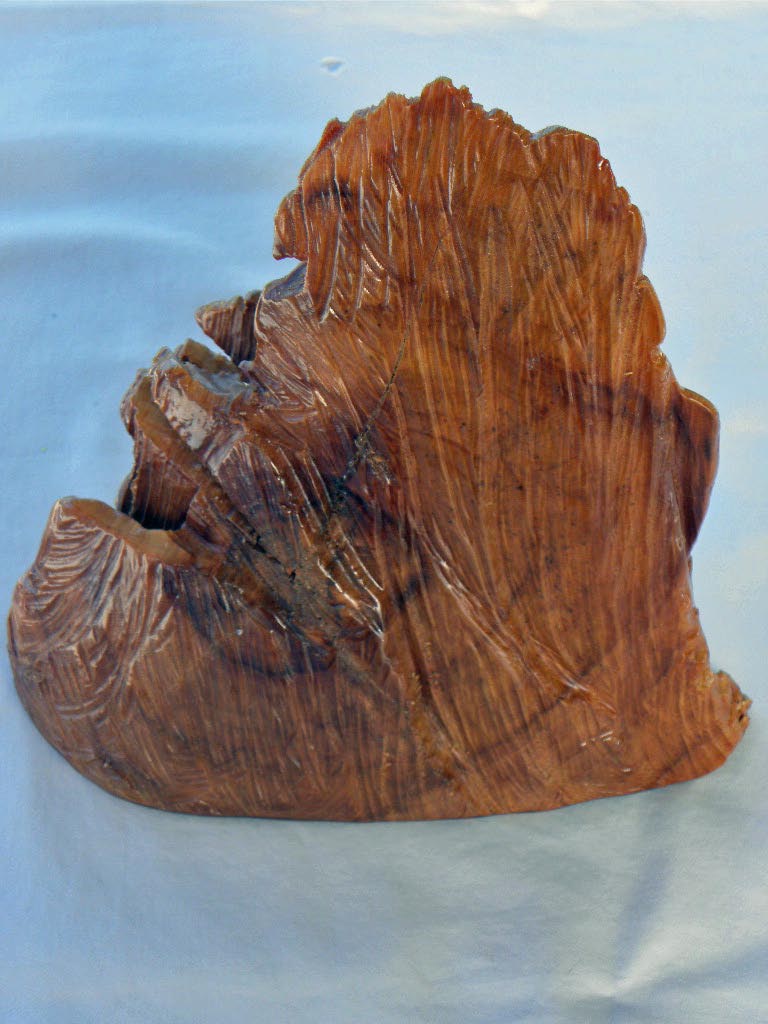
Wood: Willow
Finish: Clear Gloss Lacquer
Size: 11¼” H x 1½” D x 14½” W
Description: Most surviving paintings from the 13th to the early 16th century are painted on wooden panels. The wood most widely used in Italy was poplar, walnut, pine, cherry or other fruitwoods. In the Netherlands, France and England oak panels were most common. In Germany and Austria lime, beech, chestnut, cherry and oak were often used.
This exquisite piece of art is done in the 19th century impressionist style. The willow was textured and rough-cut to create the “canvas”. The bark of the tree was left intact along the bottom edge to add to the visual interest of the piece. Next, the sheep, summer trees, and meadow were burnt (pyrography) and etched into the wood. Small, thin, visible brush strokes using intense colors such as yellow, green, blue, white, red and brown were applied to give the image an accurate depiction of light and unusual visual angles. The entire painting was finished using a clear gloss lacquer. This fresh and original vision is a one-of-a-kind object d’art and comes ready to hang with two hooks.
|


 My Account
 Cart Contents
 Checkout